
Brick Calculator
More Free Tools You Might Find Helpful




More Free Tools You Might Find Helpful
How to Build a DIY Fire Pit: The Ultimate Guide
Introduction: Building a backyard fire pit is about a lot more than just stacking up stones. It is about creating…Do You Need a Permit for a Concrete Patio? Everything you need to know
TL;DR Most ground-level concrete patios don’t require a permit, but factors like height, drainage, and proximity to your home’s foundation…The Masonry Masterclass: How Smart Planning Saves You Pounds on Bricks, Blocks, and Mortar
TLDR: Get your brick, block, sand, and cement numbers right before you start, because smart planning saves money, avoids delays,…



Introduction
Whether you’re planning to build house, garden wall or a home extension, our free brick calculator helps you determine the exact number of bricks you’ll need. Designed specifically for UK building standards and custom alterations, it ensures accuracy and convenience for laymen and professionals alike. This tool saves time, reduce wastage and helps you as a project estimator. It has all type of standard bricks and blocks dimensions.
How to Use the Tool
How Brick Calculator Work
Our brick calculator uses a simple and accurate formula to estimate how many bricks are needed for any wall, single skin or double. It considers the wall area, brick size, mortar joint thickness and wastage percentage of bricks on site, to give a realistic result.
Main Formula for calculating bricks:
Number of Bricks = Wall Area / Brick Area (including mortar joint)
Where:
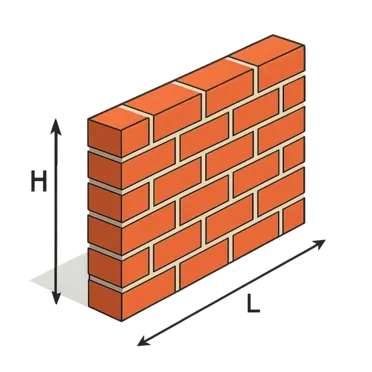
- Wall Area = Wall Length × Wall Height
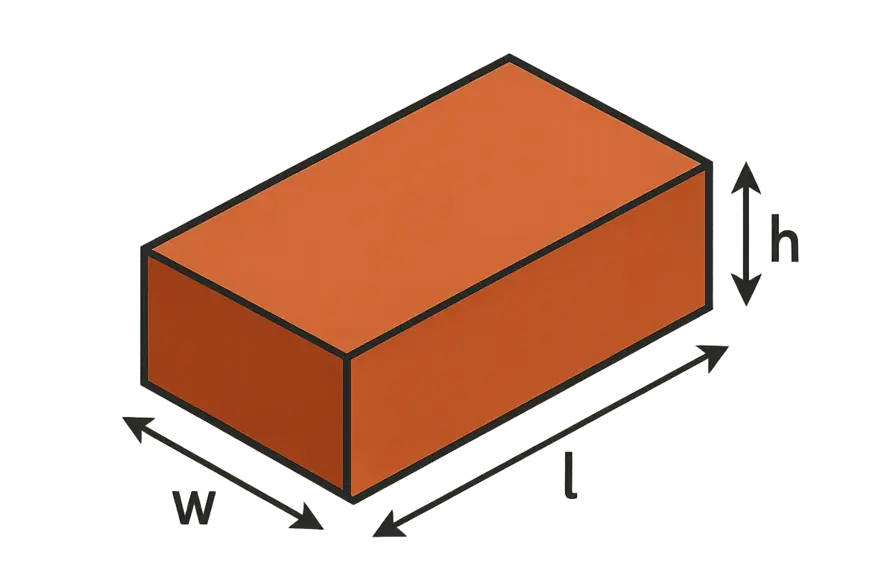
- Brick Area = (Brick Length + mortar joint thickness) × (Brick Height + mortar joint thickness)
Example:
Let’s say your wall is 3 m long and 2.4 m high.
Standard brick size = 215 × 65 mm
Mortar joint = 10 mm (added on both length and height)
First convert brick size in millimetre (mm) into metre (m):
215 × 65 mm becomes 0.215 m × 0.065 m
Brick Area with mortar = (0.215 + 0.01) × (0.065 + 0.01) = 0.225 × 0.075 = 0.016875 m²
Wall Area = 3 × 2.4 = 7.2 m²
Number of Bricks = 7.2 ÷ 0.016875 ≈ 427 bricks
So, for a wall 3 m long and 2.4 m high, you’ll need around 427 bricks.
Adding a small allowance (5–10%) for wastage or cutting, that’s about 450 to 470 bricks in total.
Parameter | Value |
|---|---|
Wall Length | 3 m |
Wall Height | 2.4 m |
Standard brick size (L × H) | 215 × 65 mm → 0.215 × 0.065 m |
Mortar joint | 10 mm → 0.01 m |
Calculated bricks (no allowance) | ≈ 427 |
With 5–10% wastage | ≈ 450 – 470 bricks |
So, for a wall 3 m long and 2.4 m high, you’ll need around 427 bricks (or about 450–470 including wastage).
Block Calculator
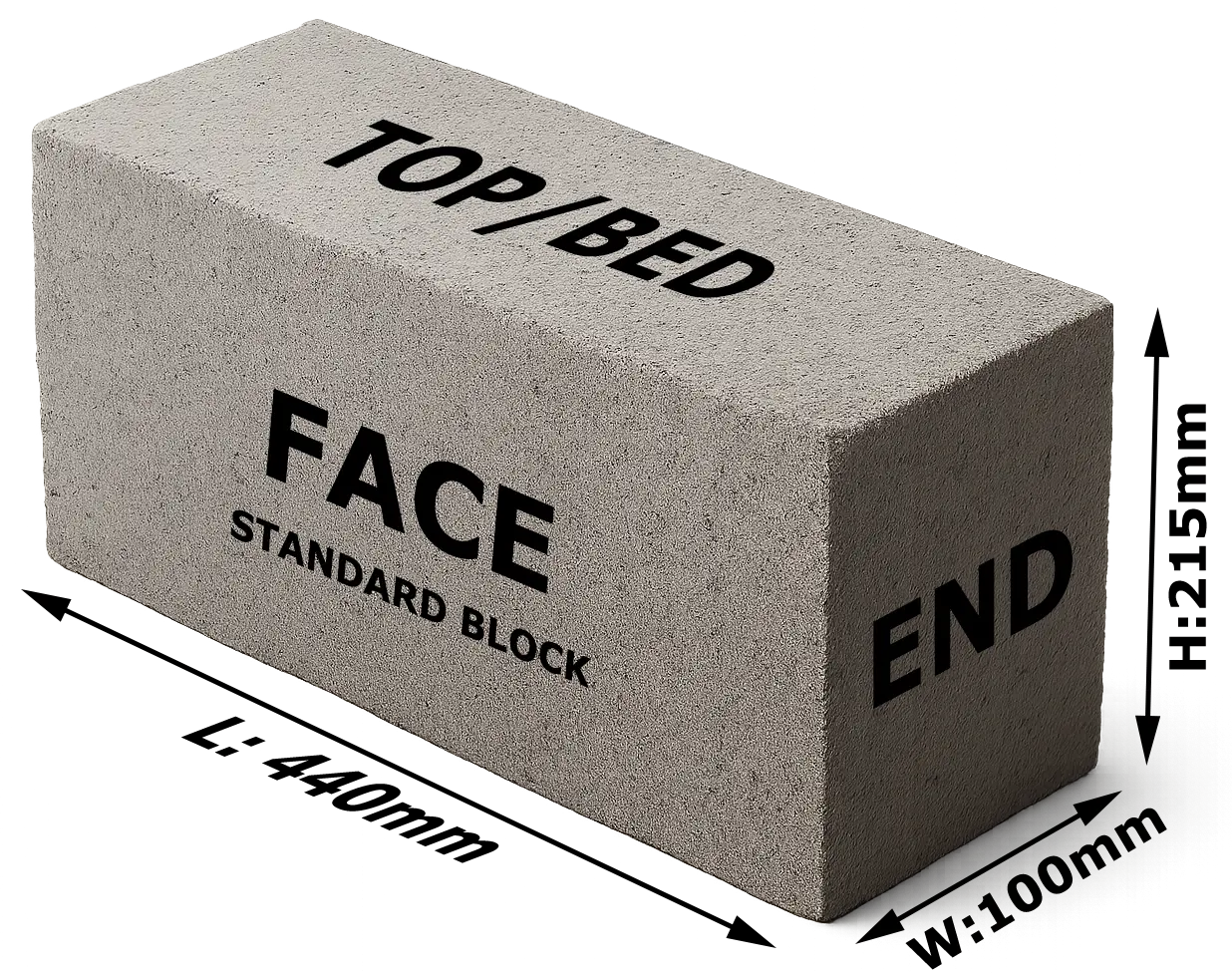
This is a multipurpose tool which not only help you calculate number of brick but also required number of blocks for your project. From “select unit type” option chose “blocks” and be ready to estimates the exact number of concrete blocks needed for any wall based on its length and height. It uses the standard UK block size of 440 × 215 × 100 mm as default, including the mortar joint thickness for accurate results. For projects using different block sizes, a custom input option lets you enter your own dimensions, ensuring flexibility for all construction types.
Why add Wastage?
No construction site is perfect, and a bit of material waste is normal. When planning your brickwork, don’t stop at just the wall area and brick size, always add about 5–10% extra bricks. It helps cover small losses and breakages on-site. Otherwise, you might end up short later, costing you extra time and money.
Mortar Calculation, Calculate Sand and Cement for Brick/Block Work
Mortar mix ratio is a ratio in which the cement and sand is mixed up to make mortar. It is written in n:m format, where the first number shows units of cement used and the second shows units of sand used in the mortar. For example, a 1:3 mix ratio means that to make mortar, 1 unit of cement is used against every 3 units of sand. A unit can be anything, like a bucket, shovel, or wheelbarrow.
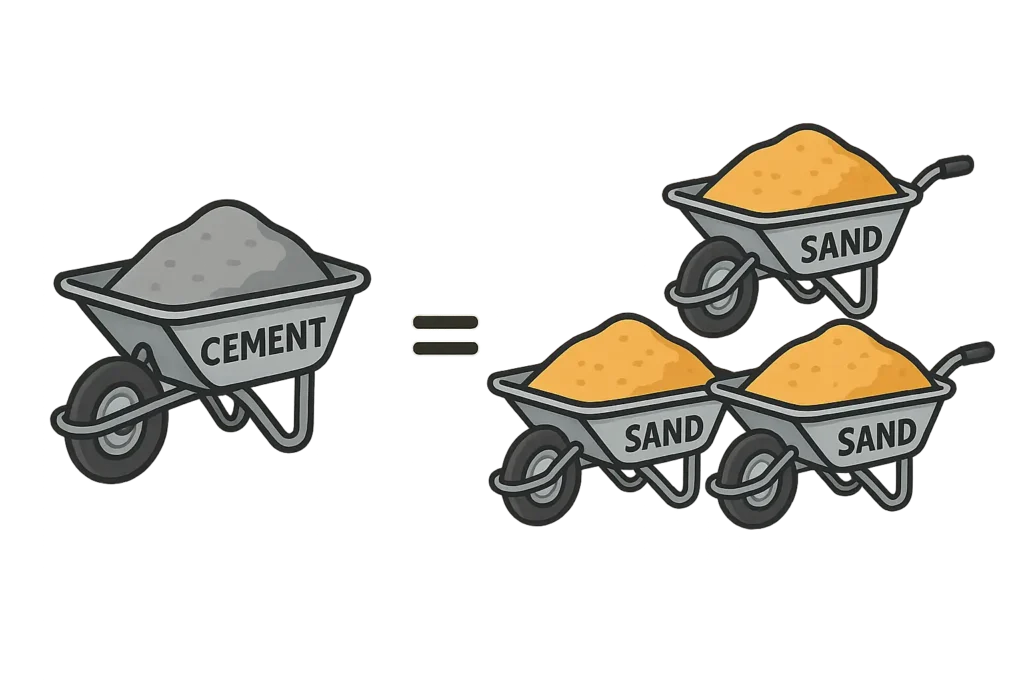
Cement:Sand = 1:3
Rich, strong mix (contains more cement). It’s used for load-bearing brickwork, foundations, and retaining walls. It is not easy to work with and costly but has excellent strength.
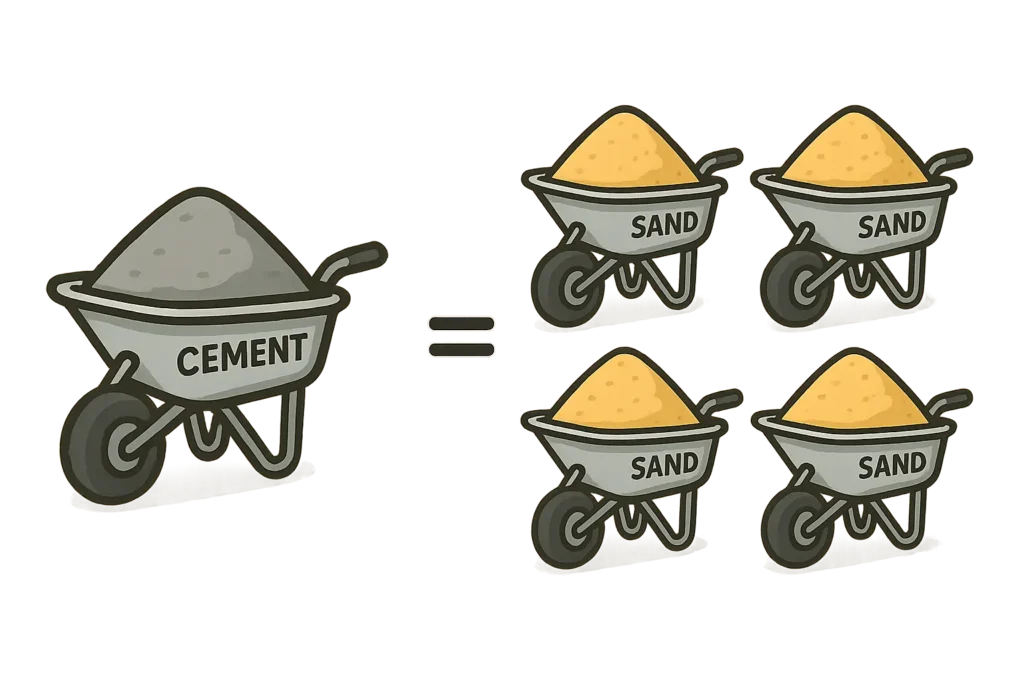
Cement:Sand = 1:4
General-purpose mix, used for standard brick walls (internal or external) and most block work. It has balanced strength and workability. This is the most commonly used ratio for general masonry work.
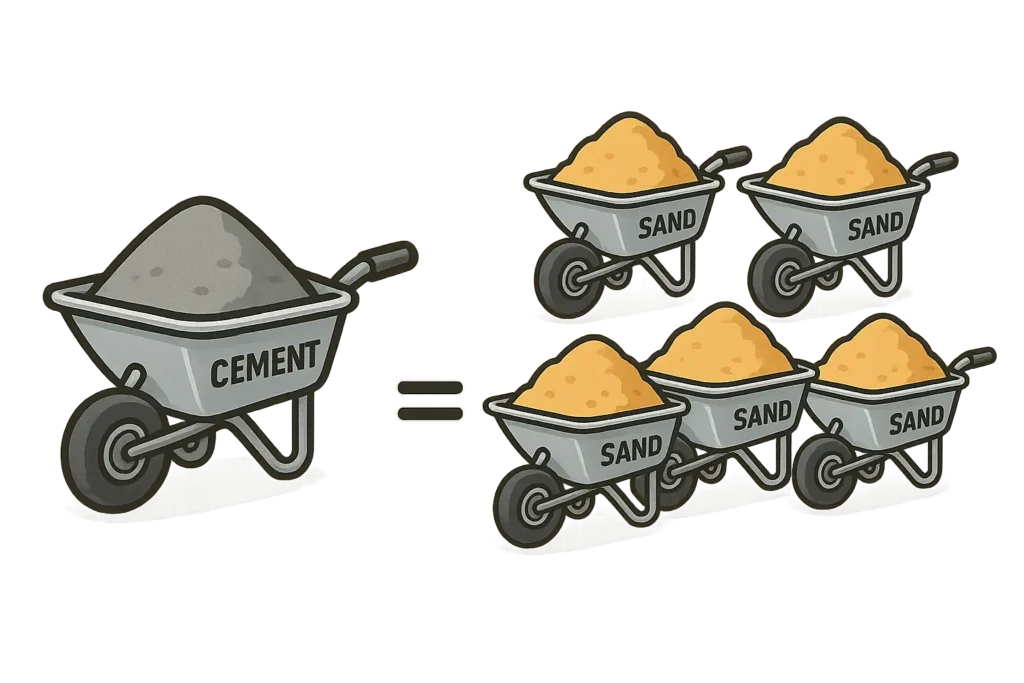
Cement:Sand = 1:5
Moderate mix, used for internal non-load-bearing walls, partition walls, and general work in mild exposure conditions. It’s easier to work with and economical but has lower strength.
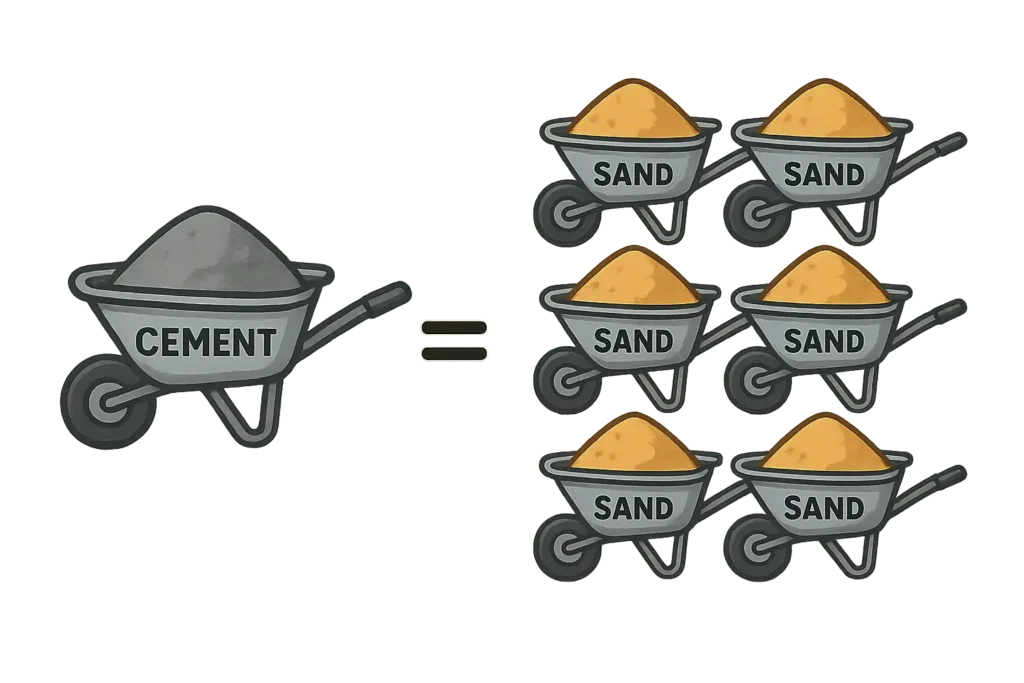
Cement:Sand = 1:6
Weak mix best for low-strength block work. It is very economical and not recommended for structural masonry.
Formula for Cement and Sand Calculation in Brickwork
Let’s learn how to calculate cement in brickwork and the formula for converting mortar volume to cement bags (25 kg), with an example.
Let:
- Vₘ = Volume of mortar required (m³)
- C = Parts of cement in mix ratio
- S = Parts of sand in mix ratio
- ρ₍cement₎ = Density of cement = 1440 kg/m³
- Bag weight = 25 kg
Step 1: Total Parts of Mix
Total parts = C + S
Step 2: Cement Volumes
Cement volume = Vₘ × C / Total parts
Step 3: Sand Volume
Sand volume = Vₘ × S / Total parts
Step 4: Convert Cement Volume to Weight
Cement weight (kg) = Cement volume × ρ (cement)
Step 5: Convert Cement Weight to Number of Bags
No. of bags = Cement weight (kg) / Bag weight (kg)
Example:
Suppose you need 1 m³ of mortar with a 1:4 mix (Cement : Sand), and bag weight is 25 kg.
- Vₘ = 1 m³
- Mix ratio 1:4 → C = 1, S = 4
- Total parts = 1 + 4 = 5
Step 1: Cement Volume
1 × 1 / 5 = 0.20 m³
Step 2: Sand Volume
1 × 4 / 5 = 0.80 m³
Step 3: Cement Weight
0.20 × 1440 = 288 kg
Step 4: Number of 25 kg Bags
288 / 25 = 11.52 bags ≈ 11.5 bags (25 kg each)
Final Answer for 1 m³ of 1:4 Mortar (No wastage):
Sand: 0.80 m³
Cement: 0.20 m³ → 288 kg → 11.5 bags (25 kg each)
How Much Mortar is Needed Per m² of Brick/Block Work?
The volume of mortar for typical brick walls built with standard brick size (215 × 102.5 × 65 mm) and 10 mm joints is around 0.022 m³ per square metre of wall.
In simple terms, for every 1 m² of single-brick wall, you’ll need roughly:
- About 0.02 m³ of mortar in total
- Which equals roughly 2.5 – 3 kg of cement (using a 1:4 mix)
- And around 12 – 15 kg of sand
If the wall is thicker, like a double-brick or cavity wall, you’ll need roughly twice that amount because two brick layers are being laid side by side.
Imperial v Metric Units
The unit selection feature in our tool makes calculations simple and convenient for everyone. Whether you prefer imperial units (feet and inches) or metric measurements (metres and millimetres), you can switch between them instantly with a single click.
This flexibility ensures accurate results no matter where you are in the world or what measurement system your project follows. Builders, architects, and DIY users all benefit from this dual-unit option. It eliminates conversion errors and saves valuable time.
Standard Size Calculator
Our brick calculator is made to keep in mind one thing only, user friendliness. It requires minimum inputs from users to calculate bricks required for different wall projects. For the ease of users, standard size of brick and blocks are given by default with mortar mix ratio. Imperial measurement system is selected by default, It automatically adds in standard brick dimensions (length x width x height) 215 x 102.5 x 65mm and mortar joint of 10mm for bricks calculation of wall.
Brick and Block Details
Knowledge about types and sizes of bricks and blocks is a must for accurate construction planning. In the UK, the most commonly used brick size is standard metric brick, measuring 215mm x 102.5mm x 65mm. Concrete block or breeze block is also used, with dimensions like 440mm x 100mm x 215mm being typical. Our brick calculator factors in popular UK brick and block sizes, making it easy to estimate requirements with precision. We also account for mortar usage, typically 10mm, which influence how many bricks fit per square metre. This makes our brick calculation more realistic. Our calculator allows you to switch between brick and block options depending upon your project.
Standard Brick and Block Sizes (UK)
Type | Size (mm) (L × W × H) | Size (inches) (L × W × H) | Common Use |
|---|---|---|---|
Standard Brick | 215 × 102.5 × 65 | 8.46 × 4.04 × 2.56 | Used for general walling, internal and external walls, houses |
Tall Brick | 215 × 102.5 × 73 | 8.46 × 4.04 × 2.87 | Used where slightly thicker courses or decorative work is needed |
Oversized Brick | 215 × 102.5 × 75 | 8.46 × 4.04 × 2.95 | Common for non-standard walling, restoration, or custom designs |
Lightweight Block (Standard) | 440 × 100 × 215 | 17.32 × 3.94 × 8.46 | Used for single-skin walls, inner leaves, and partitions |
Medium Block | 290 × 100 × 215 | 11.42 × 3.94 × 8.46 | Ideal for smaller walls or repair work |
Standard Block | 390 × 100 × 190 | 15.35 × 3.94 × 7.48 | Used for load-bearing and general wall construction |
Large Format Block | 630 × 100 × 215 | 24.80 × 3.94 × 8.46 | Used in large-scale masonry for quicker coverage |
Thick Large Block | 630 × 100 × 250 | 24.80 × 3.94 × 9.84 | Used for structural or retaining walls needing added strength |
Extra Large Block | 630 × 100 × 350 | 24.80 × 3.94 × 13.78 | Used for heavy-duty load-bearing or retaining applications |
Bricks Required
During the planning phase of any construction project, estimating the number of bricks required is one of the most important steps. Regardless of the type of wall you are building, knowing the correct quantity of brickwork helps ensure your project runs smoothly while saving money and materials. Our Brick Calculator UK makes this task quick and easy by serving as an estimator based on your wall dimensions and brick type, completely free to use.
Custom Size Calculator
Our brick wall calculator is truly a customizable tool, it gives user complete freedom of choice regarding all calculating elements. It offers plenty of size standards given for both bricks and blocks, users can also manually input the sizes by selecting custom button. Option is given between choosing imperial and matric measurement system. Then comes the wastage of brick and mortar selection option, both are fully customizable.
Mortar Calculator for Brick
Easily work out how much mortar you’ll need for your project using our brick mortar calculator . This handy tool provides an accurate estimate of the materials required for brickwork of any wall, based on UK construction standards. The tool shows the cement quantity in 25kg bags and sand volume in cubic metres or cubic feet. To find the amount of cement in kilograms, simply multiply the number of bags by 25. It’s a fast, reliable way to plan your brickwork with confidence.